




What Does Homeschool College Planning Look Like in Practice?
Consider a homeschool student taking math at a community college, completing science through an online provider, studying English and history at home, and pursuing an independent project in an area they love.
This kind of flexibility can be one of the greatest strengths of homeschooling. But when it comes time to apply to college, there are some important questions to consider.
Do the courses demonstrate appropriate academic rigor? Are the student’s math and science sequences preparing them for their intended major? Will the coursework meet UC or CSU admissions requirements? And how do we bring everything together into a transcript that makes sense to an admissions reader?
This is where I work closely with homeschool families.
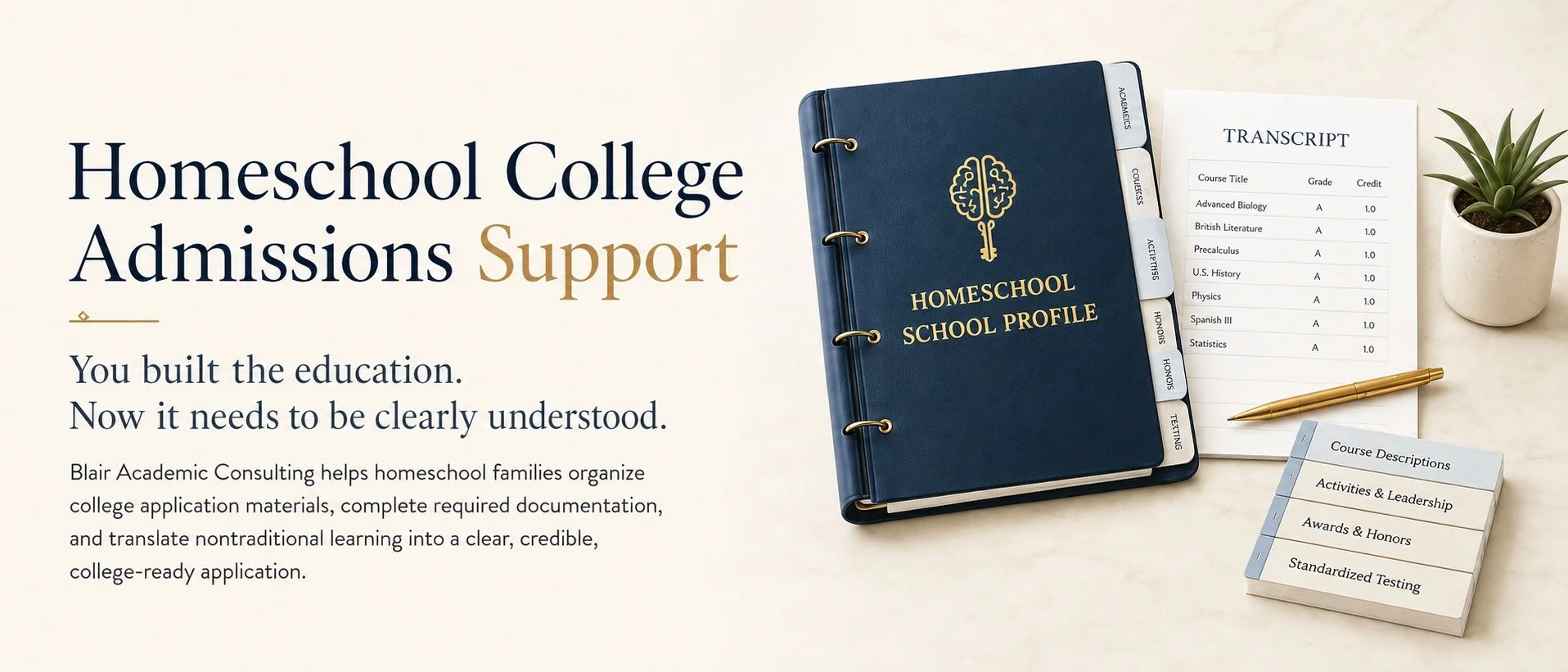
We look at the full academic picture, not just individual courses. I help families evaluate course choices, identify potential gaps, plan dual enrollment thoughtfully, and organize transcripts and supporting documentation so colleges can understand what the student has accomplished.
Ideally, we begin these conversations early in high school, while there is still plenty of flexibility to make adjustments. But even for seniors, careful attention to how an academic record is presented can make a meaningful difference in how clearly their educational experience is understood.
The Goal
The goal isn’t to make a homeschool education look like a traditional high school eduction. It’s to make sure colleges can appreciate the rigor, depth, and individuality of the education the student actually received.